

As a supplier of L-type condensers, I've spent a significant amount of time researching and understanding the intricacies of different condenser designs and their performance characteristics. One of the most common questions I encounter is about the performance differences between single-pass and multi-pass L-type condensers. In this blog, I'll delve into the details of these two types of condensers, highlighting their unique features, advantages, and disadvantages.
Understanding Single-Pass L-Type Condensers
Single-pass L-type condensers are designed to allow the refrigerant to flow through the condenser only once. This straightforward design simplifies the internal structure of the condenser, reducing the complexity of the refrigerant path. The refrigerant enters the condenser at one end and exits at the other, with heat being transferred to the surrounding environment during this single pass.
One of the primary advantages of single-pass L-type condensers is their simplicity. With fewer components and a less complex flow path, these condensers are generally easier to manufacture, install, and maintain. They also tend to have a lower pressure drop, which can be beneficial in systems where pressure differences need to be minimized.
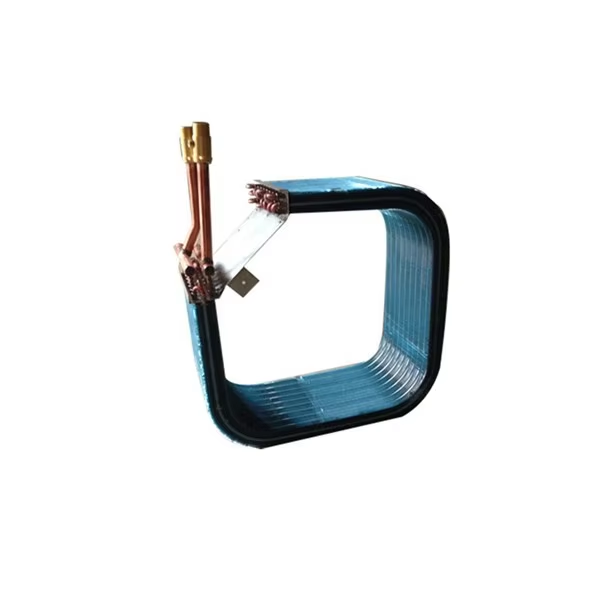
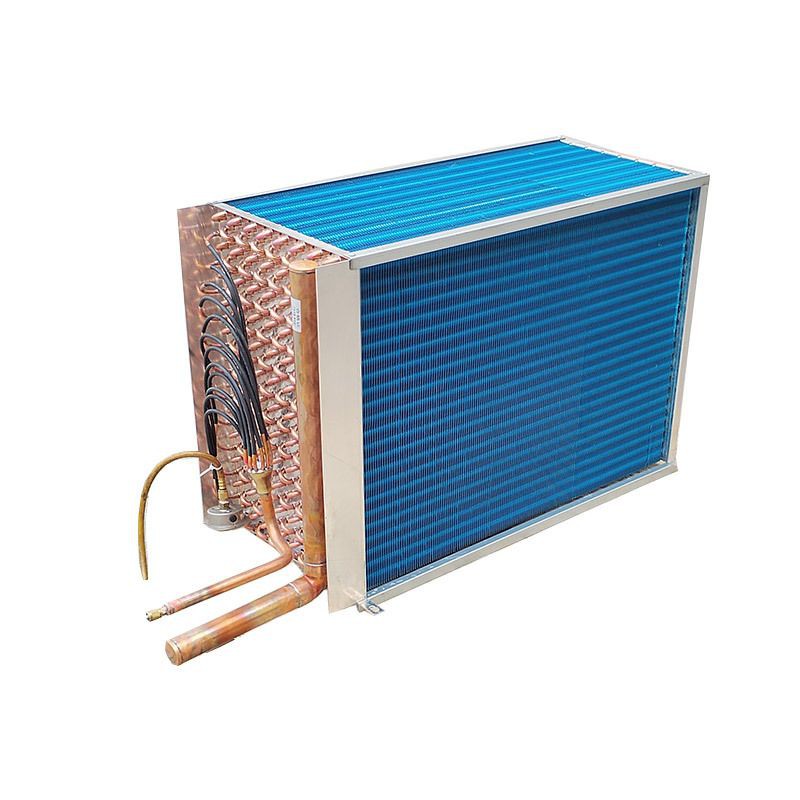
However, single-pass condensers may not be as efficient as multi-pass condensers in terms of heat transfer. Since the refrigerant only passes through the condenser once, there is less opportunity for heat to be exchanged with the surrounding air or coolant. This can result in a lower overall heat transfer coefficient, meaning that the condenser may require a larger surface area to achieve the same level of cooling as a multi-pass condenser.
Exploring Multi-Pass L-Type Condensers
Multi-pass L-type condensers, on the other hand, are designed to allow the refrigerant to flow through the condenser multiple times. This is achieved by dividing the condenser into multiple passes, with the refrigerant flowing back and forth through the condenser before exiting. This design increases the contact time between the refrigerant and the heat transfer surface, allowing for more efficient heat transfer.
The main advantage of multi-pass L-type condensers is their high heat transfer efficiency. By increasing the number of passes, the refrigerant has more opportunities to exchange heat with the surrounding environment, resulting in a higher overall heat transfer coefficient. This means that multi-pass condensers can achieve the same level of cooling as single-pass condensers with a smaller surface area, making them more compact and space-efficient.
However, multi-pass condensers are generally more complex and expensive to manufacture than single-pass condensers. The additional passes require more components and a more intricate flow path, which can increase the cost of production. They also tend to have a higher pressure drop, which can require more energy to pump the refrigerant through the condenser.
Performance Comparison
When comparing the performance of single-pass and multi-pass L-type condensers, several factors need to be considered. These include heat transfer efficiency, pressure drop, size, and cost.
- Heat Transfer Efficiency: As mentioned earlier, multi-pass condensers generally have a higher heat transfer efficiency than single-pass condensers. This is because the multiple passes allow for more contact time between the refrigerant and the heat transfer surface, resulting in a higher overall heat transfer coefficient. In applications where high cooling capacity is required, multi-pass condensers are often the preferred choice.
- Pressure Drop: Single-pass condensers typically have a lower pressure drop than multi-pass condensers. This is because the refrigerant flows through the condenser only once, resulting in less resistance to flow. In systems where pressure differences need to be minimized, single-pass condensers may be more suitable.
- Size: Multi-pass condensers are generally more compact than single-pass condensers. This is because they can achieve the same level of cooling with a smaller surface area. In applications where space is limited, multi-pass condensers may be the better option.
- Cost: Single-pass condensers are generally less expensive to manufacture than multi-pass condensers. This is because they have a simpler design and fewer components. However, the cost of the condenser is just one factor to consider. In some cases, the higher efficiency of multi-pass condensers may result in lower operating costs over the long term.
Applications
The choice between single-pass and multi-pass L-type condensers depends on the specific application. Here are some common applications where each type of condenser may be used:
- Single-Pass L-Type Condensers: Single-pass condensers are often used in applications where simplicity and low cost are the primary concerns. They are commonly used in small-scale refrigeration systems, such as domestic refrigerators and air conditioners. They are also suitable for applications where the pressure drop needs to be minimized, such as in some industrial processes.
- Multi-Pass L-Type Condensers: Multi-pass condensers are typically used in applications where high cooling capacity and efficiency are required. They are commonly used in large-scale refrigeration systems, such as commercial cold storage facilities and industrial air conditioning systems. They are also suitable for applications where space is limited, such as in marine and automotive applications.
Other Condenser Types
In addition to single-pass and multi-pass L-type condensers, there are other types of condensers available on the market. Two common types are U-type Condenser and G-type Condenser. These condensers have different designs and performance characteristics, and they may be more suitable for certain applications.
U-type condensers are designed with a U-shaped configuration, which allows for a more compact design and better heat transfer efficiency. They are commonly used in applications where space is limited, such as in small refrigeration units and heat exchangers.
G-type condensers, on the other hand, are designed with a G-shaped configuration, which provides a larger surface area for heat transfer. They are commonly used in applications where high cooling capacity is required, such as in large industrial refrigeration systems.
Another type of condenser that is commonly used in commercial applications is the Commercial Ac Condenser. These condensers are specifically designed for use in commercial air conditioning systems, and they are available in a variety of sizes and configurations to meet the specific needs of different applications.
Conclusion
In conclusion, the choice between single-pass and multi-pass L-type condensers depends on a variety of factors, including heat transfer efficiency, pressure drop, size, and cost. Single-pass condensers are generally simpler and less expensive, but they may not be as efficient as multi-pass condensers. Multi-pass condensers, on the other hand, are more complex and expensive, but they offer higher heat transfer efficiency and a more compact design.
As a supplier of L-type condensers, I can provide you with the expertise and guidance you need to choose the right condenser for your specific application. Whether you need a single-pass or multi-pass condenser, or you're interested in exploring other types of condensers, such as U-type, G-type, or commercial AC condensers, I'm here to help.
If you're interested in learning more about our L-type condensers or have any questions about the performance differences between single-pass and multi-pass condensers, please don't hesitate to contact us. We'd be happy to discuss your needs and provide you with a customized solution.
References
- Incropera, F. P., & DeWitt, D. P. (2002). Fundamentals of heat and mass transfer. John Wiley & Sons.
- Cengel, Y. A., & Boles, M. A. (2015). Thermodynamics: an engineering approach. McGraw-Hill Education.
- ASHRAE Handbook: Refrigeration (2014). American Society of Heating, Refrigerating and Air-Conditioning Engineers.